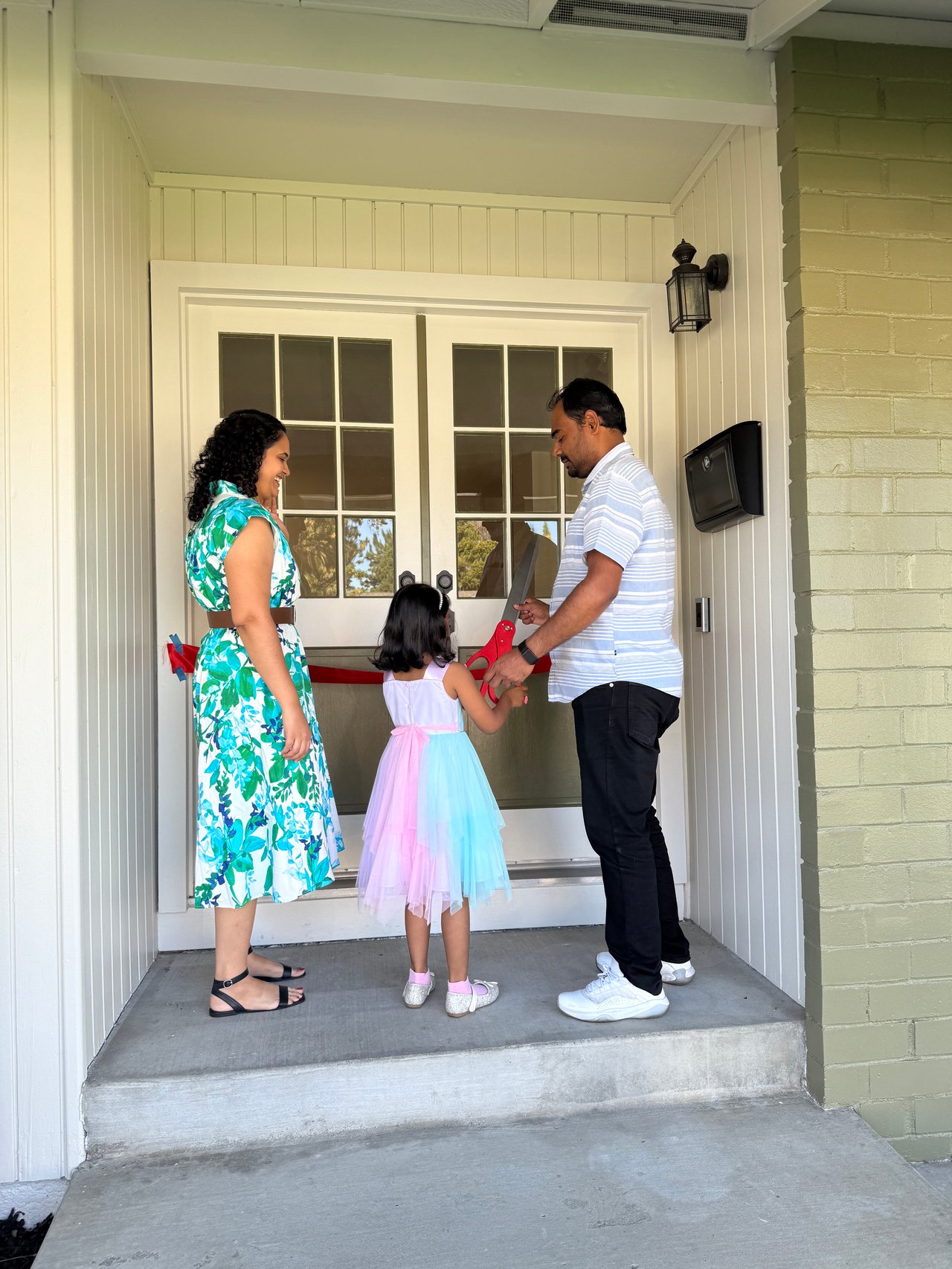
After Your Offer Is Accepted: Your Bay Area Escrow Timeline
contingencies Parul Dhamija Arora July 28, 2026
contingencies Parul Dhamija Arora July 28, 2026
There's a strange quiet that follows an accepted offer.
You've spent months touring homes and refreshing listing alerts. You've probably lost out on two or three places you'd already mentally furnished. Then the call comes — the seller picked you — and about ninety seconds later, a different feeling sets in.
Now what?
Most first-time buyers I work with have a vivid picture of the house-hunting part and almost none of what comes after. That gap is where the stress lives.
So here is what the next few weeks actually look like in a Bay Area transaction, in the order it happens. In our market, that's usually 21 to 30 days — faster than most of the country, because competition here demands it.
Escrow is a neutral third party that holds everyone's money and paperwork until every condition of the sale has been met.
The escrow company doesn't work for you. It doesn't work for the seller either. That's the entire point. It follows the written instructions in your contract and releases nothing until both sides have done what they promised.
Think of it as a referee holding the ball. Once the rules are satisfied, the ball changes hands.
Within about a day of mutual acceptance, your signed contract goes to the escrow company. This officially "opens escrow."
Your first real task is wiring your earnest money deposit — typically 3% of the purchase price. On a $1.4 million home in Milpitas, that's $42,000. On a $2.6 million home in Palo Alto, it's $78,000.
That money leaves your account within roughly three business days. It isn't an extra cost; it gets credited toward your down payment at closing. But it is real money sitting in a stranger's account, which brings me to the most important paragraph in this article.
Wire fraud is the single most common way buyers lose money in a real estate transaction.
Criminals monitor transactions and send convincing emails containing altered wiring instructions. The email looks like it came from your escrow officer. The logo is right. The signature block is right. The account number is not.
Three rules, no exceptions:
If something feels off, stop and call me. A ten-minute delay costs nothing. A misdirected wire is often unrecoverable.
Contingencies are the exit ramps written into your contract. Each one lets you cancel and keep your deposit if something specific goes wrong.
Under California's standard purchase agreement, the default window is 17 days, though the loan contingency runs longer in some versions. Every one of these dates is negotiable.
Here's the local reality: in competitive markets like Palo Alto and Redwood City, buyers routinely shorten contingencies to 7–10 days — or waive them entirely — to win. That's a genuine strategic tradeoff with real risk attached, and it's a conversation to have before you write an offer, not after.
Three contingencies matter most.
This covers the physical condition of the property.
A general inspector spends two to three hours walking the home. Depending on what turns up, you may bring in specialists for the roof, sewer lateral, foundation, or pests.
You'll receive a report that runs 40 or more pages and looks alarming the first time you read one. Almost all of it is normal. The skill is separating cosmetic issues from structural ones. A $400 electrical outlet fix is noise. A failing foundation or an unpermitted addition is not.
What I watch for varies by neighborhood:
Your lender hires an appraiser to independently value the home. If that value comes in below your purchase price, the bank will only lend against the lower number.
An example: you agree to pay $2.1 million and the appraisal returns $2 million. Your lender bases the loan on $2 million, leaving a $100,000 gap you must cover in cash, renegotiate, or walk away from.
In a market where homes routinely sell above list, this is not a rare event. Plan for the possibility before it happens.
This protects you if your financing falls through.
Your pre-approval relied on preliminary information. Now underwriting verifies everything in detail — income, assets, debts, employment.
Which leads to the most useful advice in this entire article: change nothing about your finances until you close.
Buyers have lost homes in the final week over a furniture purchase made on store credit. Underwriters re-pull credit shortly before closing.
While inspections run, the seller must deliver a disclosure packet. It typically includes:
The packet is thick and dull, and it is the most information-dense document you will receive. Read it.
Ask about anything vague. "Prior water intrusion, repaired" is a sentence that deserves a follow-up question and, sometimes, a specialist.
In California, contingencies do not expire on their own. You remove them actively and in writing.
Once you sign that removal, your deposit is genuinely at risk if you back out.
Everything before this moment is information-gathering. Signing means you've reviewed what you needed to review and you're moving forward. It's the true point of no return — not closing day.
Your lender prepares loan documents and issues a Closing Disclosure at least three business days before closing. This is federally required.
Compare it line by line against the Loan Estimate you received at application. Question anything that moved. Small discrepancies are common and usually fixable — but only if someone catches them.
You'll then sign with a notary. Expect a thick stack, most of it lender paperwork.
A few days before closing, you'll walk the property one last time. This is not a second inspection. You're confirming three things:
Run the faucets. Open the windows. Test the garage door. Confirm the seller's belongings are gone.
You wire your remaining funds to escrow. Then the county records the deed — the moment ownership legally transfers.
Recording typically happens in the morning. You usually get the keys that afternoon.
Budget for closing costs beyond your down payment: roughly 1–2% of the purchase price for buyers in our area, covering title insurance, escrow fees, recording fees, and loan costs.
Most Bay Area transactions close in 21 to 30 days. All-cash purchases can close in as few as 7 to 14 days. Our timelines run shorter than the national average because competitive offers often include faster closings.
Before you remove contingencies, you can generally cancel and recover your deposit. After contingency removal, your earnest money is at risk. That signature is the critical dividing line.
You have four options: pay the difference in cash, renegotiate the price with the seller, challenge the appraisal with additional comparable sales, or cancel if your appraisal contingency is still in place.
Sometimes — but only with a clear understanding of what you're giving up. Waiving inspections in a 1960s Fremont home carries different risk than waiving them in new Milpitas construction. This decision should always be made deliberately, never reflexively.
Your down payment plus closing costs, minus the earnest money already deposited. On a $1.5 million home with 20% down, that's $300,000 plus roughly $15,000 to $30,000 in closing costs.
Something will go sideways. An inspection will surface an unexpected repair, or an underwriter will request a document you thought you'd already sent. That isn't a sign the deal is failing — it's an ordinary Tuesday in escrow.
What matters is having someone who can tell instantly which problems threaten the transaction and which just need a phone call.
I grew up in Fremont and work out of Palo Alto, which means I know both the East Bay and the Peninsula — two markets that behave very differently.
Before you write an offer, let's talk through what your specific timeline and strategy would look like. First-time buyers deserve to understand the process before they're in the middle of it.
Parul Dhamija Arora is a Compass real estate agent serving Fremont, Newark, Milpitas, San Jose, Redwood City, and Palo Alto. CA DRE# 01930141. Recognized by RealTrends as one of America's Best Agents, 2025.
This article provides general information and is not legal, tax, or financial advice. Contract terms, timelines, and costs vary by transaction.
Stay up to date on the latest real estate trends.
Most agents know one market. I know two. Growing up in Fremont and now working out of Palo Alto, I've spent years understanding what drives value on both sides of the Bay — the established neighborhoods of the East Bay and the fast-moving, high-stakes world of the Peninsula. Whether you're buying, selling, or figuring out your next move, you deserve an agent who sees the full picture.
ARORA, PARUL DHAMIJA | CA DRE# 01930141
[email protected]
(510) 673-1238
COMPASS CALIFORNIA II, INC. | CA DRE# 01527235
ADDRESS
578 UNIVERSITY AVE
PALO ALTO, CA 94301